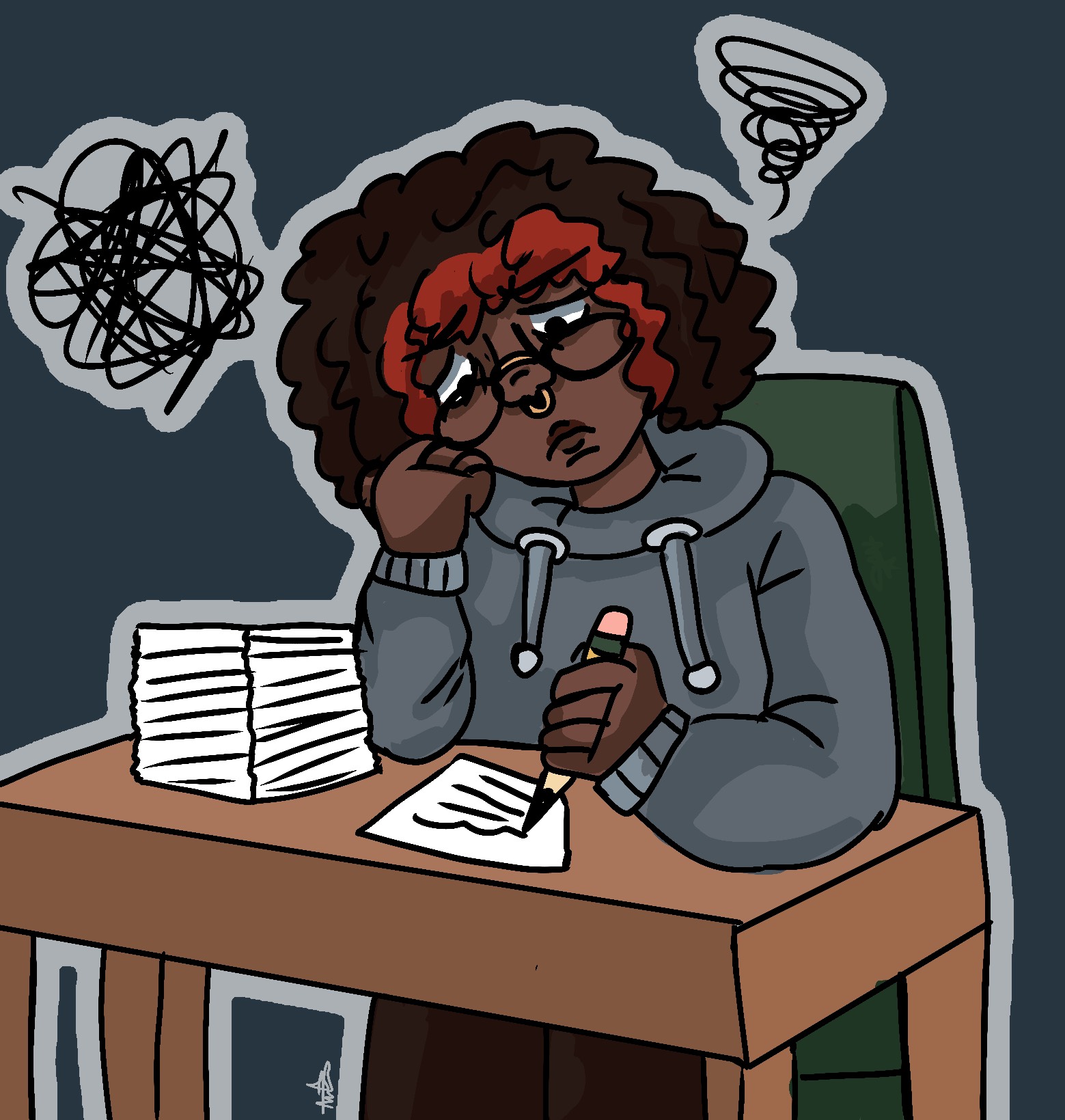
After seven hours of classes, plus any extracurriculars or shifts at work you may have, you finally get home. Instead of winding down, you open your laptop to start the second half of your day: homework. By the time you’re done, it’s late, you’re exhausted, and you have to do it all again tomorrow. How is that helping anyone learn?
Homework is supposed to be about practice, but lately it feels more like punishment. Some teachers assign a reasonable amount, but most don’t. It’s pages of math problems, essays, reading questions and projects all stacked on top of each other. When we’re spending hours every night just trying to keep up, are we actually learning, or just surviving?
That’s not even counting what happens after the bell rings. Students today aren’t just juggling school— they’re also balancing sports, extracurriculars, and part-time jobs. When they finally get to their homework, there’s barely any energy left to give.
A study conducted by researchers at the Stanford Graduate School of Education found that “less than 1 percent of the students said homework was not a stressor,” and that many students “said their homework load led to sleep deprivation and other health problems.”
That’s not a learning environment — that’s burnout disguised as discipline.
And it gets worse before breaks. Teachers assigning homework on Fridays or planning tests for the Monday after vacation is ridiculous. We’re told breaks are to “recharge,” but how can we when we’re dragging homework everywhere we go? Teachers get time off, so why shouldn’t students?
To be fair, practice does matter. I understand that students need to make sure they truly absorb the information they learned that day in order to be successful.
But there’s a big difference between reinforcing knowledge and drowning kids in assignments. More doesn’t always mean better, as it often means more stress, less sleep, and lower motivation.
Assigning hours of repetitive work doesn’t teach responsibility: it teaches burnout. Instead, students need manageable workloads that allow them to learn without feeling overwhelmed. The real solution isn’t eliminating homework altogether: it’s having balance.
Schools should create space for honest conversations between students, advisers, and teachers about what’s actually helping us learn. If we’re already putting in full-time hours at school, our homework shouldn’t feel like a second shift.