

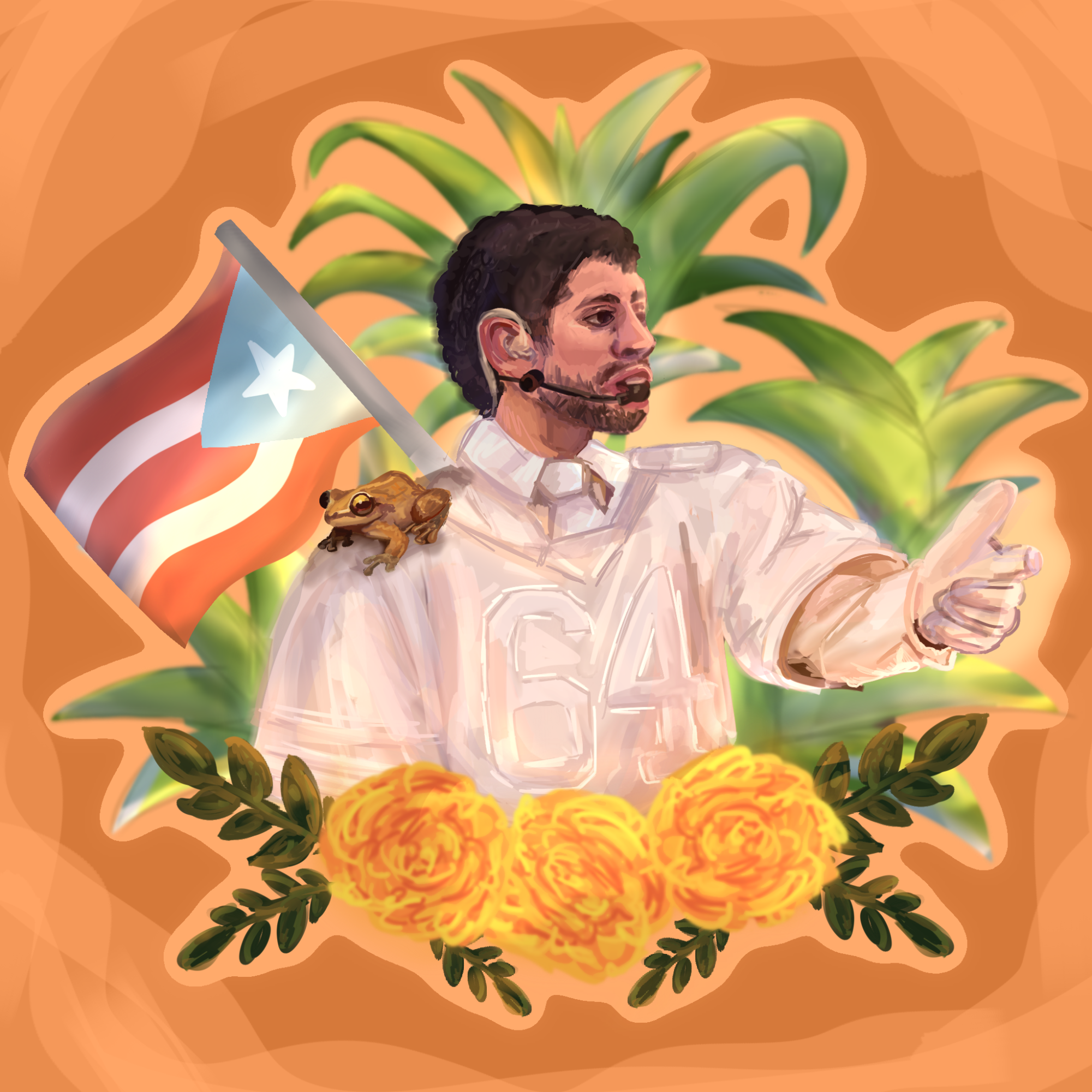
Bad Bunny’s Super Bowl LX halftime show was more than a performance—it was a bold cultural statement delivered at a critical moment in the United States.
Singing entirely in Spanish, Bad Bunny stood firmly in his identity despite backlash. During a time when immigration enforcement and anti-Latino rhetoric dominate national headlines, his decision to center Spanish on America’s biggest stage was an act of courage and representation.
Some people don’t realize that Puerto Rico is a U.S. territory, which makes Bad Bunny a U.S. citizen—a fact that often gets overlooked despite how massive his influence is. And yet, he still delivered the most-watched Super Bowl halftime show in history.
The performance proved that English is not the only language that belongs in American culture. Bad Bunny himself has emphasized that fans should focus more on the energy of the music rather than the language.
The show was rich with symbolism tied to Puerto Rico and Latin America. According to AP News, the performance opened with a sugarcane field, referencing Puerto Rico’s primary cash crop after becoming a U.S. territory in the late 19th century. It also honored farm laborers in an industry largely supported by migrant workers.
Bad Bunny and his dancers later performed atop power lines, a visual reference, AP News reported, to the lasting damage of Hurricane Maria and the island’s ongoing power outages.
He also displayed the light-blue Puerto Rican independence flag, reinforcing pride, resistance and cultural identity.
In one of the show’s quieter moments, he pointed directly at the camera, encouraging viewers to believe in themselves and recognize their own worth.
“…I never stopped believing in myself. You should also believe in yourself. You are worth more than you think, believe me,” he said in Spanish.
Appearances from Ricky Martin, Pedro Pascal, Jessica Alba, Karol G, Young Miko, Cardi B and others further highlighted the celebration of Latin culture. While some viewers criticized the show because they did not understand the language, that reaction only reinforced its purpose. Spanish is beautiful, and representation does not require translation.
Before Lady Gaga appeared, Bad Bunny sang, “¿Esto es lo que tú quería?”, meaning “Is this what you wanted?” Instead of switching to English himself, he brought out one of the biggest English-speaking pop stars into a show that remained centered in Latin culture. English did not take over—it entered on his terms, underscoring that Spanish doesn’t need to change to belong on America’s biggest stage.
The finale especially emphasized unity over division. Bad Bunny concluded the performance with a blessing for America, followed by a spoken list of the countries that make up North, Central and South America, accompanied by their flags displayed in the background.
Holding a football that read “Together, We Are America,” the message was unmistakable, with the words appearing on the big screen behind him: “The only thing more powerful than hate is love.”
Whether audiences loved it or not, the timing could not have been more significant. At a time of deep division, his performance chose courage, unity and cultural pride—and that is exactly why it mattered.








Lylah Chaffee
Feb 18, 2026 at 2:12 pm
Fantastic article, very well written!
Dom Frasca
Feb 18, 2026 at 11:35 am
Would’ve been better if it was LeBron
jill
Feb 17, 2026 at 7:48 pm
love this!!