


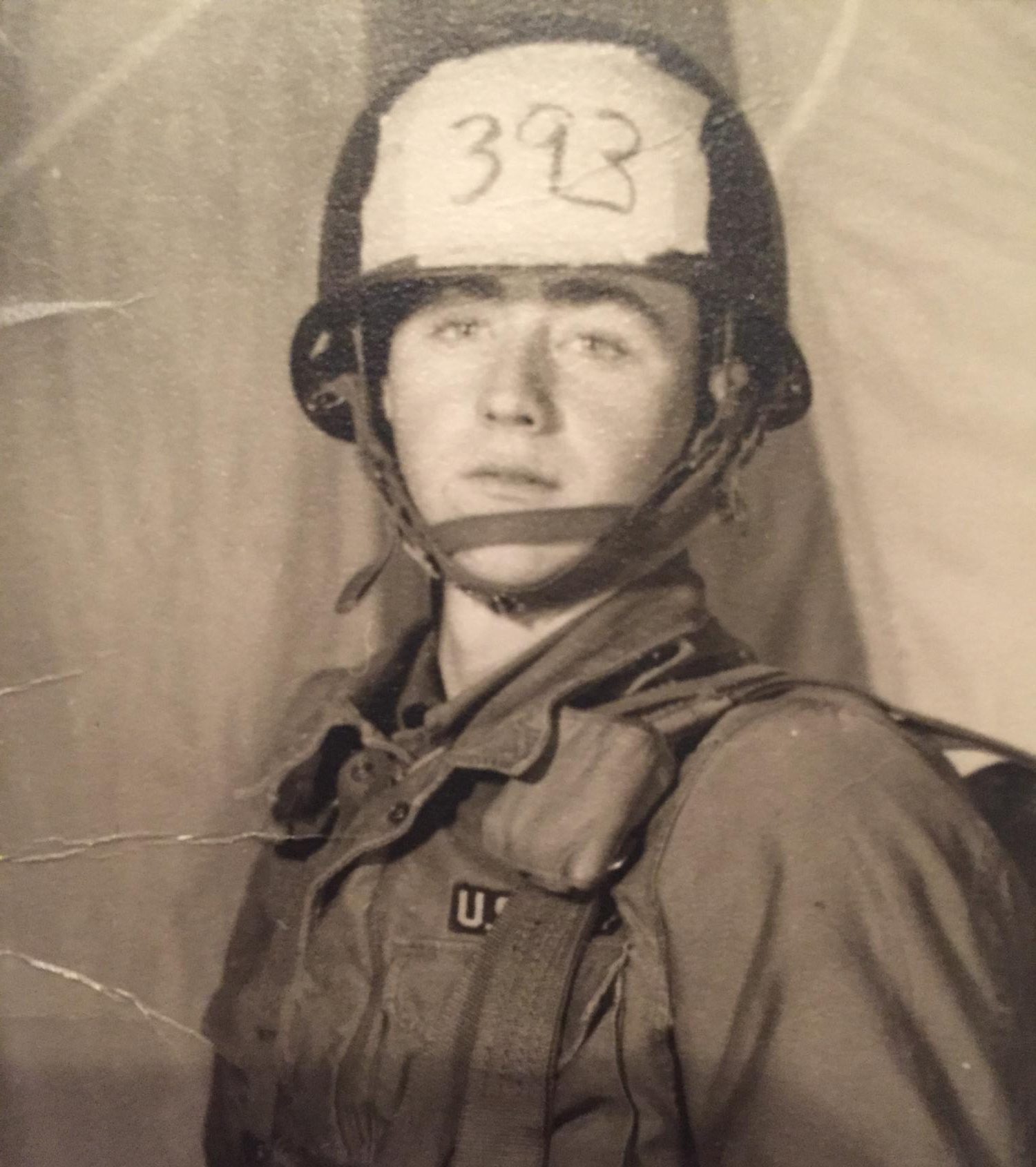
It is Dec. 22, 1966. He is 18 years old and 8,ooo miles from home. The people he loves are miles behind him, and the life he once knew has vanished before his eyes. Now, he is under attack.
During the Vietnam War, this was Frank Torre’s new reality.
After dropping out of high school, Torre enlisted in the Army and went to basic training. From there, he attended paratrooper school, where he learned how to jump out of airplanes.

However, there is more to paratrooping than simply jumping. It involves making calculated risks and planning for anything, like landing incorrectly, parachute malfunctions and even mid-air collisions. There are months of training before setting foot on a plane.
“They taught you how to jump out of a plane, how to land when you hit the ground,” Torre said, “and if the primary parachute didn’t open, [you would use] the reserve parachute.”
Once he became a paratrooper, Torre was deployed to Vietnam for a year and a half. Torre’s experience involved being transported 10,000 feet in the air with open doors, winds blowing in every direction and the ground nowhere in sight. From there, all he could do was jump.
“The first time I jumped off a plane,” Torre said, “I really don’t remember ’cause [I was] scared to death. I remember the second time; it was a thrill. The thrill was coming down, but I’m glad the parachute opened.”

Torre’s trip through Vietnam took place under harsh living conditions, with the vast majority of the combat troops not having a roof over their heads.
“You lived in foxholes,” Torre said. “You lived out in the jungle and slept when you could, [but during] nighttime, you got attacked.”
However, it was not the foxholes themselves that took a toll on Torre. Due to the constant attacks at such a young age, it caused emotional burdens on his mental health.
“It created a lot of nightmares,” Torre said. “I wanted to make sure that I made it home, and I didn’t want to get shot.”
These “nightmares” that Torre discussed are a form of PTSD that, according to the National Center for PTSD, is found in about 30% of Vietnam veterans and 10% of veterans overall.
Another one of these affected veterans is Mike King, a Tet Offensive Army veteran in the 92nd Military Police Battalion.

King was in a non-combat unit that escorted convoys and ships and had to guard the incoming ships to prevent attacks. The unit also guarded the barges that held critical military supplies. They were anchored off the coast of Vietnam and in some of the rivers of Saigon.
“I always like to say, [the U.S. military officials] forgot to tell the Viet Cong that we were non-combat,” King said, “but what it really did was put us in a precarious position because we weren’t allowed to be aggressive.”
Torre and King are both members of the Chapter 992 Vietnam Veterans of America, which meets annually for breakfast at the Puritan in Manchester. Through this chapter, Torre and King have aligned with many veterans who have shared their experiences, including three-time Purple Heart veteran Melvin Murrell. Murrell is the president of the chapter and has worked to ensure these veterans can feel this sense of connection.
“I believe that it’s necessary for us to let people know who we are, what we were and why we went,” Murrell said. “We were a very patriotic generation.”
All of the behind-the-scenes efforts that Murrell has made over the years have not gone unnoticed by the members of the chapter.
“We’ve all been driven through the gutter,” King said, “but it’s a sense of camaraderie, joy and cheerfulness when we all come together.”
These veterans have been through tough experiences, King said, “I’m glad to be home.”






Michelle Wooding
Mar 5, 2026 at 4:22 pm
Nice job showcasing some true American patriots!
Noreen Heffner
Mar 4, 2026 at 9:45 am
Outstanding article!
Love our veterans
jdawg
Feb 25, 2026 at 9:13 pm
Great article, love some history on LSO.