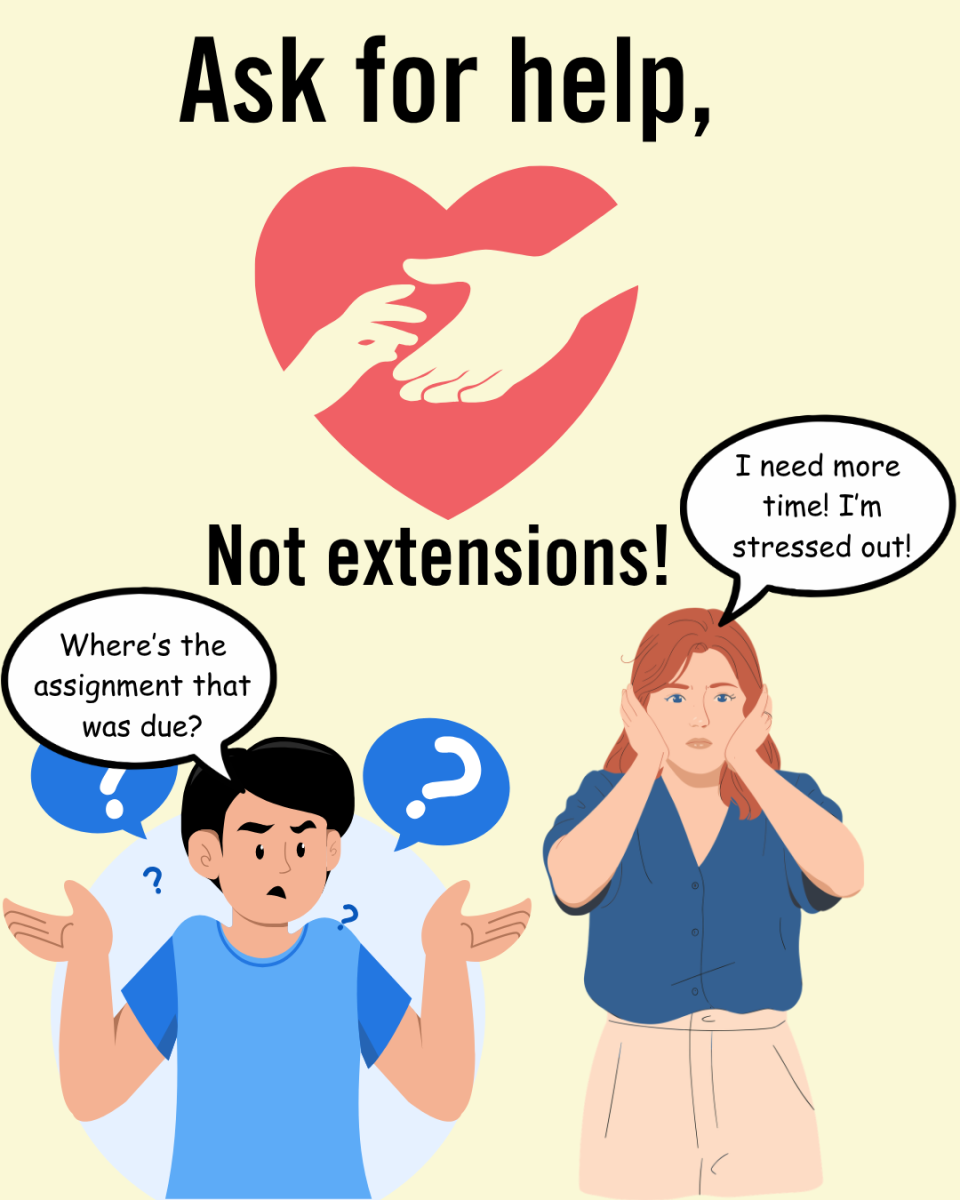
Mental health is an extremely serious topic that should not be taken lightly. It should be handled respectfully and personally. What should never be done is milking the issue and overexaggerating mental problems in exchange for personal gain.
Students who struggle should never feel ashamed to seek help. But there is a difference between asking for help and complaining about issues with no urgency to resolve them.
When a student has no motivation to get better, they’re putting a bad reputation on the entire community of people who work every single day to achieve a better state of mental health.
No one wants to be around someone for eight periods a day, 47 minutes a class who non-stop trauma dumps every issue they’ve ever gone through like they’re competing in the trauma olympics.
People need to learn the difference between true trauma and what having a bad day is. It gets irritating watching people get handed things just because they “struggle.”
It is apparent how many students go to teachers and explain how they’ve not been able to complete any assignments because they were stressed out the previous night; they expect to be able to walk away without even a slap on the wrist.
This is not how it works in the real world. Someone who has had a rough night shouldn’t expect their boss to give them an extension on work that needs to get done. So why are we normalizing a mindset where we can get out of our responsibilities by taking the “easy way out” and blaming mental health?
I understand how, some nights, completing homework just seems impossible. But don’t drag it out and spend every waking moment of the day coming up with excuses to avoid doing the assignment.
Just deal with the consequences and move on instead of blaming mental health issues and trying to get extensions.
According to Inkspot, 65 percent of teenagers struggle with some sort of mental health issue silently. Students who truly struggle may not want to ask for help because of the stigma surrounding “doing it for attention.”
Due to this stereotype, those who actually need it are going to feel like they are being annoying by asking for extensions, but that’s not the case.
It is often the people who do not want to get better and are proud to exploit themselves who try to get out of their responsibilities. Using hardships as an excuse diminishes the importance of understanding how to support someone who struggles severely.
Teachers should not have to question whether a student is lying to them. Not only should they not have to question them, they can’t. A student can’t be accused of lying about mental health, because if they’re being truthful, that could cause further issues.
So it is up to us to be honest with everyone, but also ourselves. By telling everyone you have mental health issues, you will slowly start to convince yourself that you do and could cause actual problems to develop. This is a bad habit that will lead to failure post-high school.
It’s okay to lean on someone once in a while, but we need to pick up the habit of bouncing back.