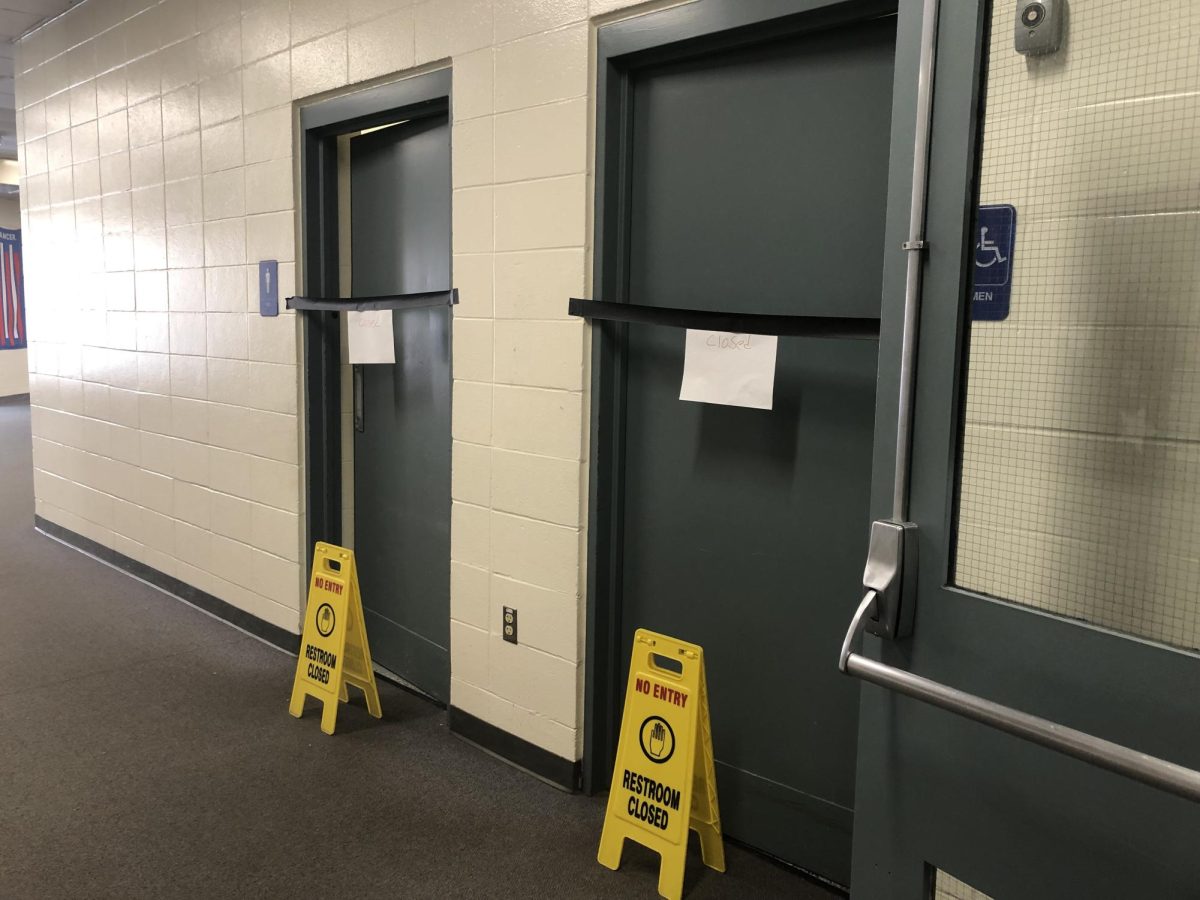
More than a month after the vape detectors, called Zeptive Alarms, were installed in the bathrooms, the devices have continued to detect and log multiple vaping incidents throughout the school day.
Once the detectors send an alert, assistant principals identify which students were in the bathroom at that time by reviewing security camera footage or by responding directly if they happen to be nearby.
Principal Rick Barnes explained that the school follows a procedure based on “reasonable suspicion.” Depending on the situation, students identified may be searched in the presence of another adult. Not every student who is searched is guilty of something, but when a violation is confirmed, Barnes said offenses result in “generally a five-day suspension.”
Despite the presence of the Zeptive Alarms, student vaping has not decreased.
“Students obviously still use [vapes], so that’s an issue,” Barnes said. “We’d like to see [vaping] reduced or eliminated, because at the end of the day, it’d be great not to have it.”

“Vaping is an issue, and we are looking more into preventing it,” O’Connor said. “Prevention is step one, and we have more planned. Because of vaping, we are planning to move the people in charge of foyer duty closer to the bathrooms, so they can monitor who goes in and out.”
With vaping remaining persistent among students, administration is considering additional measures to address the issue. At the school board meeting held on Nov. 25, the potential use of handheld security wands, devices designed to find vapes, was mentioned. Though it was discussed, it has not yet been approved.
“The school board is in a process, and we’re actively having this discussion,” Barnes said. “[The metal detector wands] are something that could help us locate vapes because they’re not always easy to find.”
In addition, Barnes added that vaping has been “harder to deal with” and that the administration is “trying to get our hands on it.”
“We want to reduce it, but the question is: what is the best way to reduce it?” Barnes said. “Usually, [the solution involves] multiple things: It’s prevention, which I think we could do more of, and then it’s also consequences. [The goal] is to reduce unhealthy behaviors for everybody.”
The administration plans to focus on prevention by combining education and support services to help students make healthier choices.
“Obviously, there are prevention pieces that come forward in a health class, but there are other things we can do more of, because at the end of the day, we’re talking about people who are using these things to cope,” Barnes said. “People have used nicotine to cope for generations.”
Addressing the underlying causes of vaping is also a focus, as the behavior often reflects how students cope with various challenges.
“If we can help the students cope with what the actual issue is,” Barnes said, “whether through referrals to our school community counselor, Mrs. Buell, or through their school counselor. Maybe we can get at the root cause of the behavior because the behavior is just a symptom of something else that the student is trying to deal with.”